
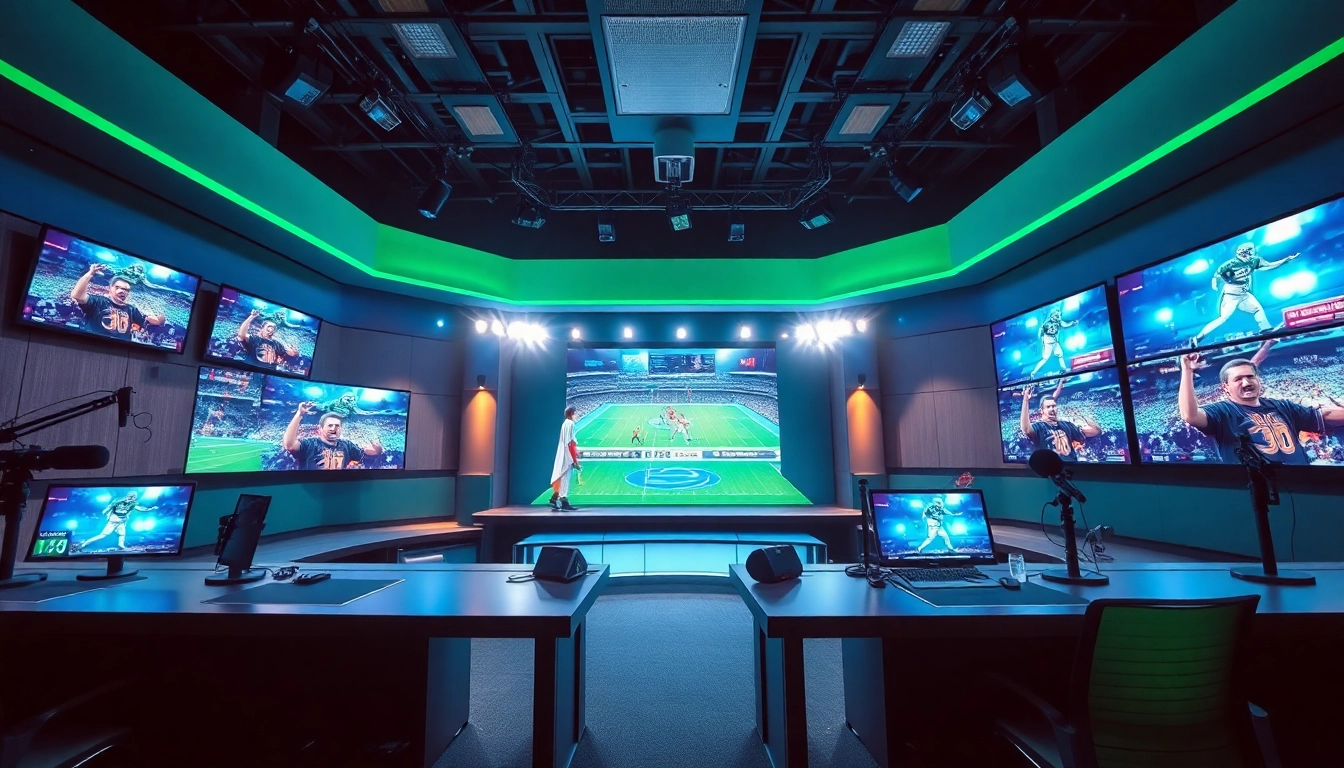
Understanding Sports Broadcasting
Definition and Importance
Sports broadcasting refers to the distribution of live sports events or related programming via various media such as television, radio, and digital streaming platforms. This form of media is essential as it connects sports fans to the events they love, transcending geographical barriers and allowing them to experience the thrill of competition in real time. The ability to broadcast games not only enhances public accessibility to sports but also serves as a vital revenue stream for leagues and teams through advertising, sponsorships, and viewer subscriptions. As a result, the significance of Sports Broadcasting continues to grow in the contemporary era.
The Evolution of Sports Broadcasting
Historically, the broadcast of sports dates back to the early 20th century when radio brought games from stadiums into the homes of fans. This was a revolutionary step that allowed millions to follow their favorite teams without needing to attend events in person. Television further transformed the landscape in the 1950s, creating a richer experience through imagery and sound.
The advent of cable and satellite technology in the 1970s and 1980s expanded viewers' access even further. However, the most significant change in recent years has been the rise of digital streaming, which provides on-demand access to sports content. Fans can now stream games from anywhere at any time, leading to a change in how broadcasters produce and present sporting events.
Key Components of Sports Broadcasting
Several essential components characterize sports broadcasting, including:
- Live Events: The core of sports broadcasting is the live transmission of games and matches.
- Commentary: Expert analysis and engaging narratives enhance the viewer experience.
- Graphics and Statistics: Real-time data presentation helps viewers better understand and engage with the game.
- Interactivity: Many platforms offer features that allow fans to interact with the broadcast through voting, Q&A sessions, or chatting.
Types of Sports Broadcasting Channels
Television Broadcasting
Television remains one of the most traditional and trusted mediums for sports broadcasting. Networks provide extensive coverage, high-quality visuals, and expert commentary. Notably, majors such as ESPN and NBC Sports have cemented their positions by acquiring broadcasting rights for high-profile events.
The addition of HD and 4K streaming has elevated the viewing experience while features like picture-in-picture and simulcasts grant viewers multiple perspectives on the same event. Network broadcasters often also incorporate pre and post-event analysis, creating a fuller narrative around each sports event.
Radio Broadcasting
Though less prominent than television, radio broadcasting holds a unique charm, particularly for fans on the go. Radio provides live commentary and updates, making it accessible even to those without a visual medium. Its popularity spikes significantly during significant sporting events like the Super Bowl or the World Cup.
Innovations in streaming technology have allowed traditional AM/FM stations to reach a global audience via online platforms. This adaptability ensures that radio will maintain its relevance in the sports broadcasting landscape.
Digital Streaming Platforms
The digital landscape is increasingly becoming the go-to option for sports broadcasting. Platforms like YouTube, Hulu, and specialized services like DAZN offer live streams and on-demand access to sports content. This shift allows fans to customize their viewing experience with options such as replays and multi-game views.
Moreover, these platforms often incorporate social media integrations that facilitate real-time fan engagement, expanding the converging worlds of sports and technology.
Technical Aspects of Sports Broadcasting
Equipment You Need
To deliver seamless sports broadcasts, high-quality equipment is paramount. Essential items include:
- Cameras: High-definition cameras capable of capturing dynamic movements are crucial for television broadcasts.
- Microphones: Quality microphones ensure that both commentators and surrounding sounds contribute to the immersive experience.
- Mixers: These allow for sound balance between multiple sources, ensuring clarity in the broadcast.
- Lighting: Proper lighting sets the stage for visual clarity and ambiance during nighttime events.
Broadcasting Software and Tools
Alongside hardware, robust broadcasting software is essential. Programs like OBS Studio, Wirecast, and vMix allow for live switching, graphics integration, and encoding. Additionally, cloud-based solutions provide scalability and flexibility for various broadcasting formats, including multi-channel distribution.
Internet Bandwidth Requirements
Streaming high-quality sports broadcasts necessitates robust internet bandwidth. For instance, HD streaming typically requires a minimum of 5Mbps, while 4K streaming can demand upwards of 25Mbps. Reliable internet connection is crucial to avoid delays, buffering, or compromising video quality, which can detract from viewer experience.
Content Creation and Engagement
Creating Compelling Sports Narratives
Pairing thrilling sporting events with compelling storytelling can enhance audience retention. Broadcasters are now focusing on athlete backgrounds, team rivalries, and historical contexts to enrich the viewing experience. Documentaries, player interviews, and on-the-ground insights can set a standard for engaging content that keeps viewers invested beyond the games themselves.
Interactivity and Fan Engagement Strategies
Engaging fans directly can greatly enhance their experience. Techniques such as live polls, question-and-answer sessions with athletes or commentators, and interactive play-by-play can create a sense of community among viewers. Encouraging fan submissions for user-generated content during broadcasts, like social media posts, can further strengthen this bond.
Leveraging Social Media for Reach
Today, social media platforms serve as powerful tools for expanding content reach and engagement. Integrating real-time updates, behind-the-scenes content, and fan-exclusive offers can attract diverse audiences. Platforms like Twitter and Instagram also facilitate direct communication with viewers, creating a two-way dialogue that enhances brand loyalty and keeps fans excited.
Measuring Success in Sports Broadcasting
Analytics and Performance Metrics
Measuring broadcasting success is critical for gaining insights about audience behavior and preferences. Metrics such as Total Viewership, Average Watch Time, Demographic Analysis, and Viewer Retention Rates offer valuable data that can shape future strategies. Tools like Google Analytics, social media insights, and broadcasting-specific software contribute to intelligent data collection and analysis.
Understanding Audience Feedback
Regularly soliciting and analyzing audience feedback provides valuable qualitative insights. Surveys, social media engagement, and viewership ratings can inform broadcasters about the strengths and weaknesses of their presentations. Feedback can guide the evolution of content strategies, ensuring they remain aligned with viewer expectations.
Adapting Strategies Based on Data
Data-driven decisions allow broadcasters to tailor experiences that resonate with their audience. For example, if viewership spikes during specific segments, broadcasters may want to invest more in equivalent content. Similarly, identifying viewer drop-off rates can help refine pacing, presentation style, or interactivity to capture attention effectively.
FAQs
What is Sports Broadcasting?
Sports broadcasting involves the transmission of live sports events to audiences through various media, including television, radio, and online platforms.
What tools are essential for sports broadcasting?
Essential tools include high-quality cameras, microphones, broadcasting software, and reliable internet connectivity to ensure smooth transmission.
How has sports broadcasting evolved?
Sports broadcasting has evolved from traditional TV and radio to encompass digital streaming platforms, enabling fans to watch games on-demand from anywhere.
What strategies enhance audience engagement?
Enhancing engagement can involve interactive social media content, real-time updates, and fan-driven programming to create a community around the broadcast.
What metrics should be tracked in sports broadcasting?
Important metrics include viewer ratings, social media engagement, audience demographics, and feedback from surveys to assess performance and adapt strategies.